
Condo & HOA Mold in Naples, FL
Mold in a condo raises two questions at once: who fixes it, and who pays. We'll help Naples unit owners and associations get quotes from Florida-licensed mold assessors and remediators.
Get a Free Quote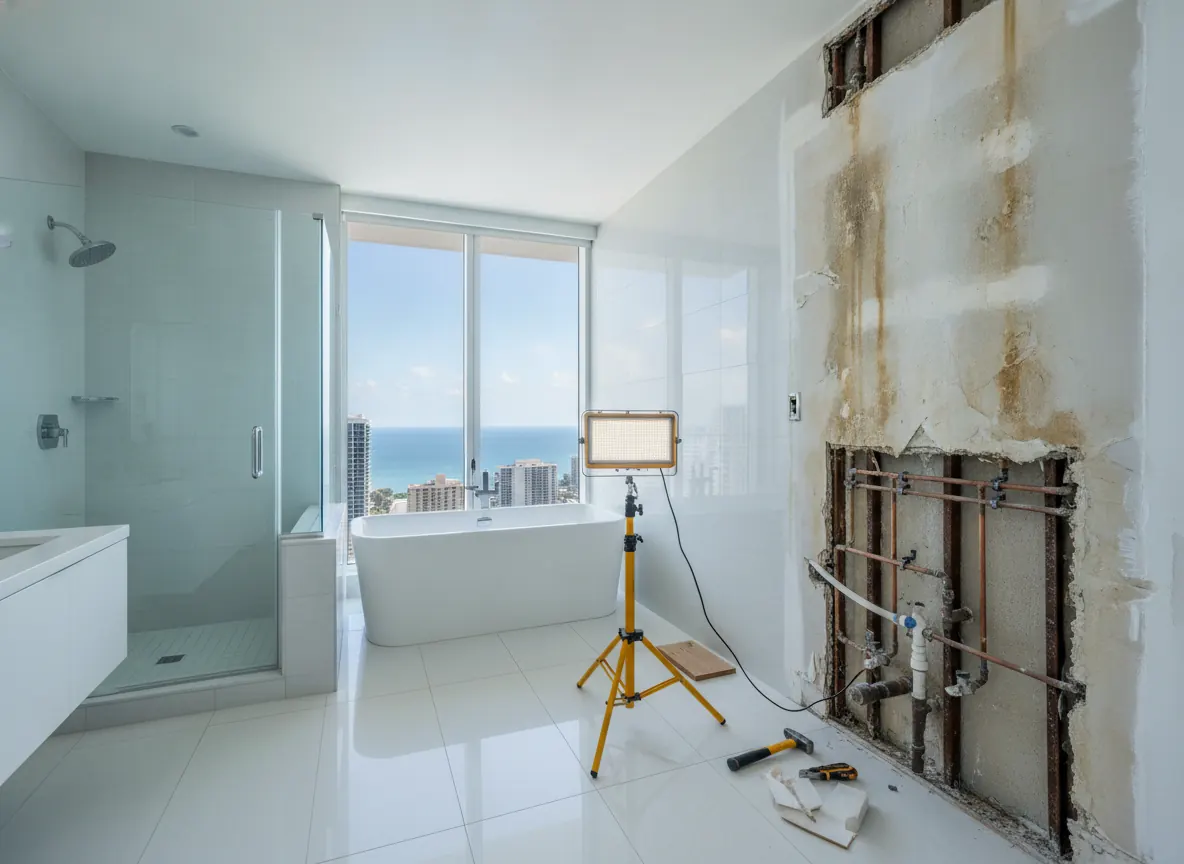
Why condo mold is its own problem in Naples
Naples is a city of multi-unit buildings. The American Community Survey (2020–2024) puts the share of homes in buildings with 5+ units at about 59.9% in the City of Naples, 70.4% in Pelican Bay and 56.4% on Marco Island. In a building, water rarely respects unit lines: a supply line, a shared stack, a balcony slider or the unit above can wet your walls, and the mold follows the moisture.
Naples FL Mold Remediation is a free quote and referral service. We connect Naples and Collier County unit owners, boards and managers with Florida-licensed mold assessors and remediators. Tell us what you're seeing and we'll help you get quotes. Ask any company for its Florida license number and verify it at MyFloridaLicense.com.
Who is responsible for mold in a Florida condo?
No statute in Florida's Condominium Act, chapter 718, assigns responsibility for "mold" by name. Responsibility generally follows maintenance and insurance duties, the source of the water, and your building's declaration. The provisions most often cited are:
- s. 718.113(1): "Maintenance of the common elements is the responsibility of the association," subject to limited common elements the declaration assigns to owners.
- s. 718.111(11)(f): association coverage excludes items such as "floor, wall, and ceiling coverings, electrical fixtures, appliances, water heaters, water filters," and "such property and any insurance thereupon is the responsibility of the unit owner."
- s. 718.111(11)(j): property insured by the association "shall be reconstructed, repaired, or replaced as necessary by the association as a common expense," but a unit owner pays uncovered costs when damage results from "intentional conduct, negligence, or failure to comply with the terms of the declaration."
So the honest answer is that it depends on where the water came from, what your declaration says and how the insurance split under s. 718.111(11) applies to your building. Your governing documents and insurance policies control. Our post on condo mold and who pays in Collier County goes further.
This is general information, not legal advice. Ask your association's attorney or your own attorney about a specific dispute.
Permits: Collier requires them for work in multi-family buildings
Collier County's post-hurricane permitting guidance states that "all commercial and multi-family buildings will require a permit for any work performed." That covers condo buildings. The county's new under-$7,500 permit exemption, which starts July 1, 2026, applies only to single-family detached homes, so it does not cover condo units. Before work starts, ask the remediator and any rebuild contractor who will pull the permit and whether the association must sign off. City of Naples buildings fall under the city's own Building Department, so check there for city addresses.
Many associations also have their own rules on contractor insurance certificates, work hours, elevator use and notice to neighbors. Get those from management early so they don't hold up the job.
A practical path when you find mold in a condo
Stop the water and report it
Shut off the supply if it is a leak in your unit and notify management in writing with photos and dates. Delays can complicate the responsibility question later.
Get an independent assessment
A licensed assessor's report identifying the source helps the owner, the association and insurers work from the same facts. See mold inspection & testing.
Sort out scope and responsibility
Compare the report with the declaration and both insurance policies. Under Florida's 12-month rule, the assessor and remediator are typically separate companies.
Compare remediation quotes
Licensed remediators price the assessor's protocol, including containment that protects hallways and neighboring units.
Permit, rebuild and re-check
Rebuild work in multi-family buildings needs a Collier permit, and many owners request a post-remediation check before walls close.
Can mold spread from one condo to another?
Mold growth follows moisture, so the risk is usually the water, not spores drifting through walls. A slow leak in a shared wall, a plumbing stack or the unit above can wet materials on both sides. That's why the source matters so much, and why remediation in a building usually includes containment so dust stays out of common hallways and adjacent units. Our article on whether mold can spread between condos has more detail.
Seasonal owners face an added risk because a leak can run for weeks before anyone notices. See seasonal home mold and our guide to closing up a Florida condo for the season.
Older coastal buildings may also be in the middle of milestone-inspection work: Collier County applies the rule to condo and co-op buildings of three or more stories at 25 years old within 3 miles of saltwater, 30 years otherwise, then every 10 years. If your building is doing structural repairs, ask the board how leak and mold findings are being handled.
Typical costs for condo mold work
| Item | Typical range |
|---|---|
| Mold inspection | $450–$800 (national avg about $500; Florida avg about $739); extra samples $60–$80 each |
| Small area (~50 sq ft) | $500–$1,500 |
| Medium area (100–200 sq ft) | $1,000–$6,000 |
| Per square foot of affected area | $10–$30 |
Note: remediation quotes may not include inspection or clearance testing (This Old House). The real price comes from a licensed pro's on-site assessment.
See the full cost guide, or request free quotes and mention that the property is a condo so pros can plan for building rules and permits.
Frequently asked questions
Is the condo association responsible for mold in my unit?
It depends. No Florida statute assigns mold by name. Under s. 718.113(1) the association maintains common elements, while s. 718.111(11)(f) makes owners responsible for items like wall and floor coverings and appliances. The water source, your declaration and both insurance policies control. This is general information, not legal advice; ask your association's attorney or your own.
Who pays for mold remediation in a Florida condo?
Under s. 718.111(11)(j), property the association insures is repaired by the association as a common expense, but a unit owner can owe uncovered costs when damage results from intentional conduct, negligence or failure to follow the declaration. Owners carry coverage for items listed in s. 718.111(11)(f). Read your governing documents and policies. This is general information, not legal advice.
Do I need a permit for mold work in a Naples condo?
In unincorporated Collier County, the county's post-hurricane guidance says all commercial and multi-family buildings require a permit for any work performed, and that includes condo buildings. City of Naples addresses fall under the city's Building Department. Ask your remediator and rebuild contractor who pulls the permit, and check whether your association requires approval before work begins.
Can mold spread from a neighbor's condo into mine?
Mold grows where there is moisture, so the usual path is water: a leak in a shared wall, a plumbing stack or the unit above can wet materials in more than one unit. Report suspected leaks to management in writing, and consider an independent licensed assessment that identifies the source, which helps owners and the association decide next steps.
How do I test for mold in my condo?
Book an independent, Florida-licensed mold assessor. EPA notes that if visible mold growth is present, sampling is usually unnecessary, so the assessor focuses on extent and the moisture source. A written report helps when the association, insurers or neighbors are involved. Verify the assessor's license at MyFloridaLicense.com. Typical inspections run $450–$800 in national cost guides, not quotes.
Seeing or smelling mold? Get a clear plan.
Free, no-pressure quotes from Florida-licensed pros across Naples, Marco Island, Golden Gate and Collier County.