
Seasonal & Second-Home Mold in Naples, FL
Closing up for the summer or coming back to a musty house? We'll help seasonal owners in Naples and Collier County get quotes from Florida-licensed mold assessors and remediators.
Get a Free Quote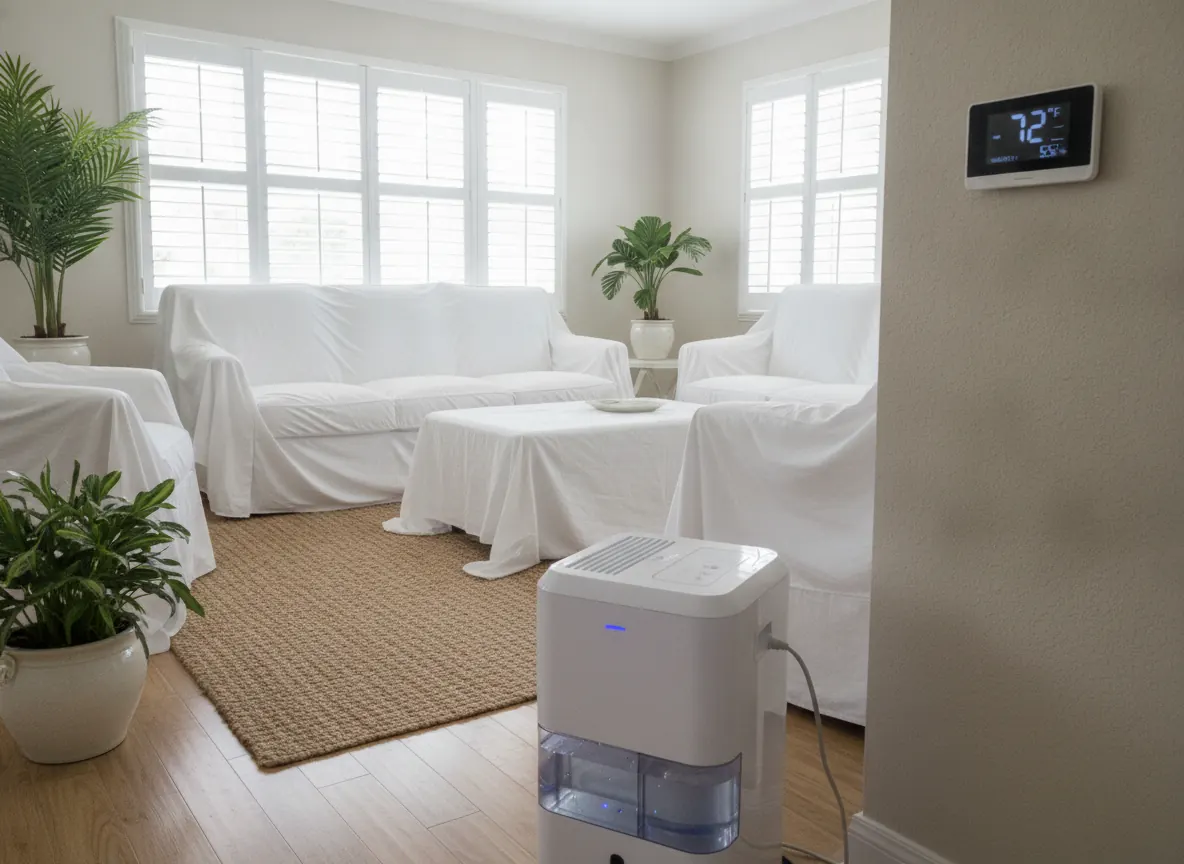
Naples is a seasonal town, and summer is mold season
According to the American Community Survey (2020–2024), 7,707 housing units in the City of Naples, about 40.8% of all units, are vacant "for seasonal, recreational, or occasional use." On Marco Island the share is about 49.2% (9,100 units), in Pelican Bay about 41.8%, and across Collier County 59,512 units, about 24.9%.
Many of those homes sit closed through the wettest, most humid months. NOAA's 1991–2020 normals for Naples Municipal Airport show June through September bringing about two-thirds of the area's 49.55 inches of annual rain. Our own averages of NOAA hourly observations for 2015–2024 show the dew point at or above 70°F in about 93–99% of hours from June through September, with average relative humidity near 80%.
Naples FL Mold Remediation is a free quote and referral service. We connect Naples and Collier County homeowners with Florida-licensed mold assessors and remediators, whether you're here or still up north. Ask any company for its Florida license number and verify it at MyFloridaLicense.com.
What the guidance says about AC and humidity while you're away
UF/IFAS Extension's publication "Closing Your Seasonal Home" (HE887) warns that "the summer heat and humidity can cause mildew and mold-spore growth." Its advice includes:
- "Leave your air conditioner set to no higher than 85 degrees (F)."
- Running the AC periodically, because "periodic air conditioner operation will remove moisture from your home."
- "A dehumidifier operated by a drain to carry away moisture can help, though not as much as air conditioning."
- "Have the humidistat calibrated by your air conditioning company."
- "Find a trusted friend or relative to routinely check on your home."
LCEC, a Southwest Florida electric cooperative, says in its "Vacant Homes" guide that "mold and mildew can grow nearly anywhere if the relative humidity is consistently 70 percent or higher." It lists three options: a timer that cycles the AC "for two hours every day," which it says gives "the highest level of security against mildew growth"; a humidistat set "to cycle the A/C whenever indoor humidity exceeds 65 percent," which "uses the least power"; and a thermostat set at 83°F, which it calls "the least efficient method" and recommends "only for short or infrequent trips."
The sources use different numbers, so treat them as ranges from those organizations, not a single rule. Your AC contractor can tell you which approach suits your system. Our post on AC and humidity settings while you're away compares them.
A closing-up checklist that helps prevent mold
- Have the AC serviced before you leave: clean coil, clear drain line, working float switch, calibrated humidistat
- Pick a setting approach from the guidance above and confirm it with your AC contractor
- If you use a dehumidifier, run it to a drain rather than a bucket
- Shut off the main water supply, or at least the supply to washers, ice makers and toilets
- Leave interior doors and closet doors open so conditioned air reaches every room
- Arrange for someone to check the home regularly, and after every major storm
- Consider a remote humidity and leak sensor so you see a problem in days, not months
Condo owners have extra steps with management and the association; see closing up a Florida condo for the season and our condo & HOA mold page. The full homeowner version is in closing up your Naples home for summer.
Coming back to a musty home: what to do
Look and document
Check closets, the air handler closet, under sinks, behind toilets and along exterior walls. Photograph anything you find and note humidity if you have a sensor.
Don't run fans over visible growth
Avoid disturbing mold until you know its extent. EPA says areas under about 10 sq ft can usually be handled by homeowners; larger areas call for a licensed pro.
Get an independent assessment
A licensed assessor can trace whether the cause was humidity, an AC failure or a leak. See mold inspection & testing.
Compare remediation quotes
Under Florida's 12-month rule the assessor and remediator are typically separate companies, so you can collect quotes against the assessor's written scope.
Fix the cause
EPA warns that if the water problem isn't fixed, the mold will most likely come back. Often that means AC service; see AC & HVAC mold.
Typical costs
| Item | Typical range |
|---|---|
| Mold inspection | $450–$800 (national avg about $500; Florida avg about $739); extra samples $60–$80 each |
| Small area (~50 sq ft) | $500–$1,500 |
| Medium area (100–200 sq ft) | $1,000–$6,000 |
| HVAC system and ducts | $3,000–$10,000 |
Note: remediation quotes may not include inspection or clearance testing (This Old House). The real price comes from a licensed pro's on-site assessment.
More detail is in the cost guide. If anyone in the household has health concerns, talk to a doctor. When you're ready, request free quotes; we usually reply the same day, wherever you are.
Frequently asked questions
What temperature should I leave my Naples home at over the summer?
UF/IFAS Extension's "Closing Your Seasonal Home" says to leave the air conditioner set no higher than 85°F. LCEC's "Vacant Homes" guide describes 83°F as the least efficient option, recommended only for short or infrequent trips, and prefers a daily two-hour AC timer or a humidistat set at 65%. Ask your AC contractor which approach fits your system.
What humidity should a vacant Florida home be kept at?
LCEC's "Vacant Homes" guide says mold and mildew can grow nearly anywhere if relative humidity is consistently 70% or higher, and suggests a humidistat that cycles the AC whenever indoor humidity exceeds 65%. UF/IFAS recommends having the humidistat calibrated by your air conditioning company. These are those organizations' guidelines, not a promise that mold won't grow.
Is a dehumidifier enough instead of running the AC?
UF/IFAS Extension says a dehumidifier operated by a drain to carry away moisture can help, though not as much as air conditioning. Many seasonal owners use both: the AC on a timer, humidistat or setpoint, and a drained dehumidifier as backup. A remote humidity sensor lets you confirm it is working while you are away.
I came back and my house smells musty. What should I do?
Look for visible growth in closets, the AC closet and under sinks, and photograph what you find. Avoid stirring up larger patches. EPA says areas under about 10 square feet can usually be cleaned by homeowners. For larger or hidden growth, get an independent assessment from a Florida-licensed mold assessor, then compare remediation quotes from licensed remediators.
How common are seasonal homes in Naples?
Very common. The American Community Survey (2020–2024) counts 7,707 housing units in the City of Naples, about 40.8% of all units, as vacant for seasonal, recreational or occasional use. On Marco Island the share is about 49.2%, and across Collier County it is about 24.9%, or 59,512 units.
Seeing or smelling mold? Get a clear plan.
Free, no-pressure quotes from Florida-licensed pros across Naples, Marco Island, Golden Gate and Collier County.